

What are Hazardous Locations?
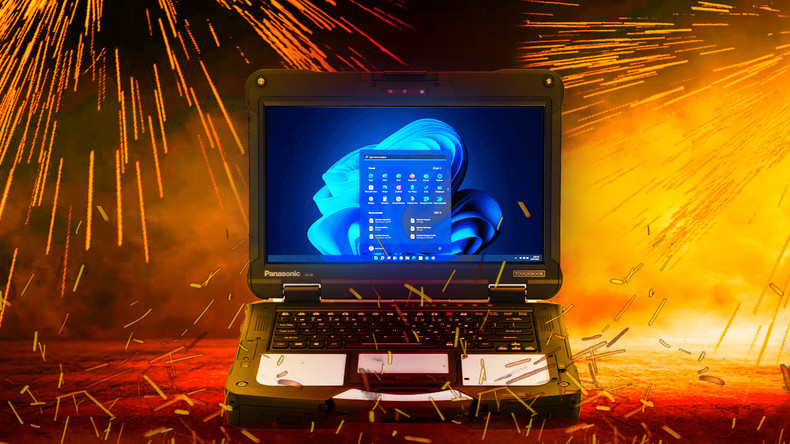
As technology becomes more and more imperetive for not only every day use but almost every job imaginable, the requirement to bring computers safely into certain environments continues to be a challenge. Rugged environments such as heavy dust, intense moisture, high heat or bitter cold, are only superceded by hazardous locations. While Panasonic TOUGHBOOK rugged computers are built for some of the most extreme environments, hazardous rated zones are another matter entirely. Only certain models of TOUGHBOOK computers are rated to enter these zones and even then only in select and very specific configurations.
Hazardous Zone Ratings
Most of the time when discussin hazardous locations in relation to technology, the applicable hazard is electronic discharge caused explosion. The level of hazard an environment poses is measured on a defined scale. The most widely accepted standard to define this scale was developed by the American National Standard Institute to easily define what environment a device could operate in safely. When applied to computers, the ANSI ratings are separated by Class and Division. The class defines first the materials that may be present while the division defines when those materials might be encountered. Class 3 is the least dangerous and is defined by areas where ignitable fibers are present but not in the air such as a cotton or fabric textile mill. Class 2 is where combustible dust are present and in the air such as a coal mine or cardboard factory. Class 1 is the most dangerous with combustible or flammable gases and vapors present such as an oil rig or refinery. The Division defines how likely the defined material would be present with Division 2 indicating the material maybe present under abnormal working conditions while Division 1 indicates that the material is expected under normal working conditions. Class 1 Division 1 is therefore the most dangerous of hazardous environments and most technology is not allowed because of the extreme danger of static discharge and explosion.
TOUGHBOOK Hazardous Location Certification
Certain configurations of Panasonic TOUGHBOOK computers are rated to be ANSI Class 1 Division 2 (or C1D2.) Most fully rugged models such as the FZ-40, CF-33 and FZ-G2 haev ANSI C1D2 rated configurations but the semi rugged class of TOUGHBOOK (FZ-55) does not. Specially sealed ports, internal buffers and grounding components enable rated units to be brought into and used in the C1D2 environments. It is important to note that there are no Panasonic TOUGHBOOKS rated to be brought into a C1D1 environment; in fact it is very rare to find ANY brand of technology willing to rate their product for that environment since the potential consequance is so high. When a rugged computer or rugged tablet is rated for a hazardous environment, any modification to the unit voids the rating and the computer should no longer be considered safe to operate in those locations.